Whole Home WiFi Singapore
Architectural network design for reliable coverage, proper client roaming, and high-capacity smart-home integration. We build the infrastructure for modern living.
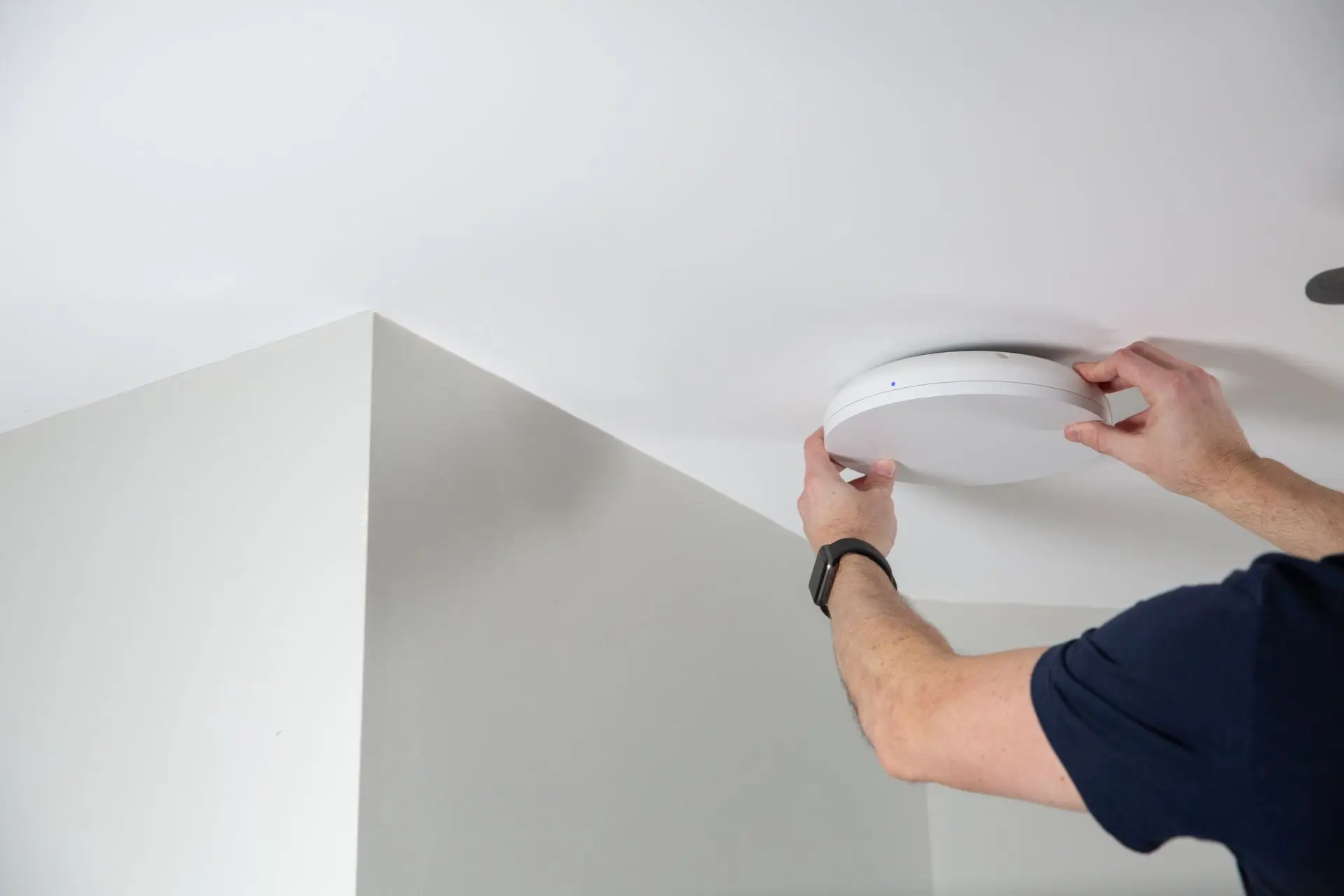
One Router vs. Distributed Coverage
Replacing centralized broadcast limits with targeted architectural coverage.
Single Router
Signal fades before reaching the edge.
Distributed Access Points
Overlapping zones for seamless roaming.
Wireless Mesh
Mesh nodes communicate wirelessly to extend coverage without requiring Ethernet cables.
Advantage: Highly flexible for existing homes lacking conduits.
Trade-off: Reliant on wireless backhaul, subject to RF interference.
Suitability: Medium apartments with light structural barriers.
Wired Access Points
Each access point is hardwired directly to a central network switch for a dedicated uplink.
Advantage: Bypasses wireless attenuation, maximizing stability.
Requirement: Needs structured cabling (e.g., Cat6A) to each zone.
Suitability: Multi-storey, landed, and highly integrated smart homes.
Wi-Fi 6
The robust baseline for modern homes, offering excellent device density handling through OFDMA on the 5GHz band.
Wi-Fi 7
Utilizing Singapore's approved 6GHz spectrum, Wi-Fi 7 introduces 320 MHz channels and Multi-Link Operation (MLO) to drastically reduce latency and increase stability.
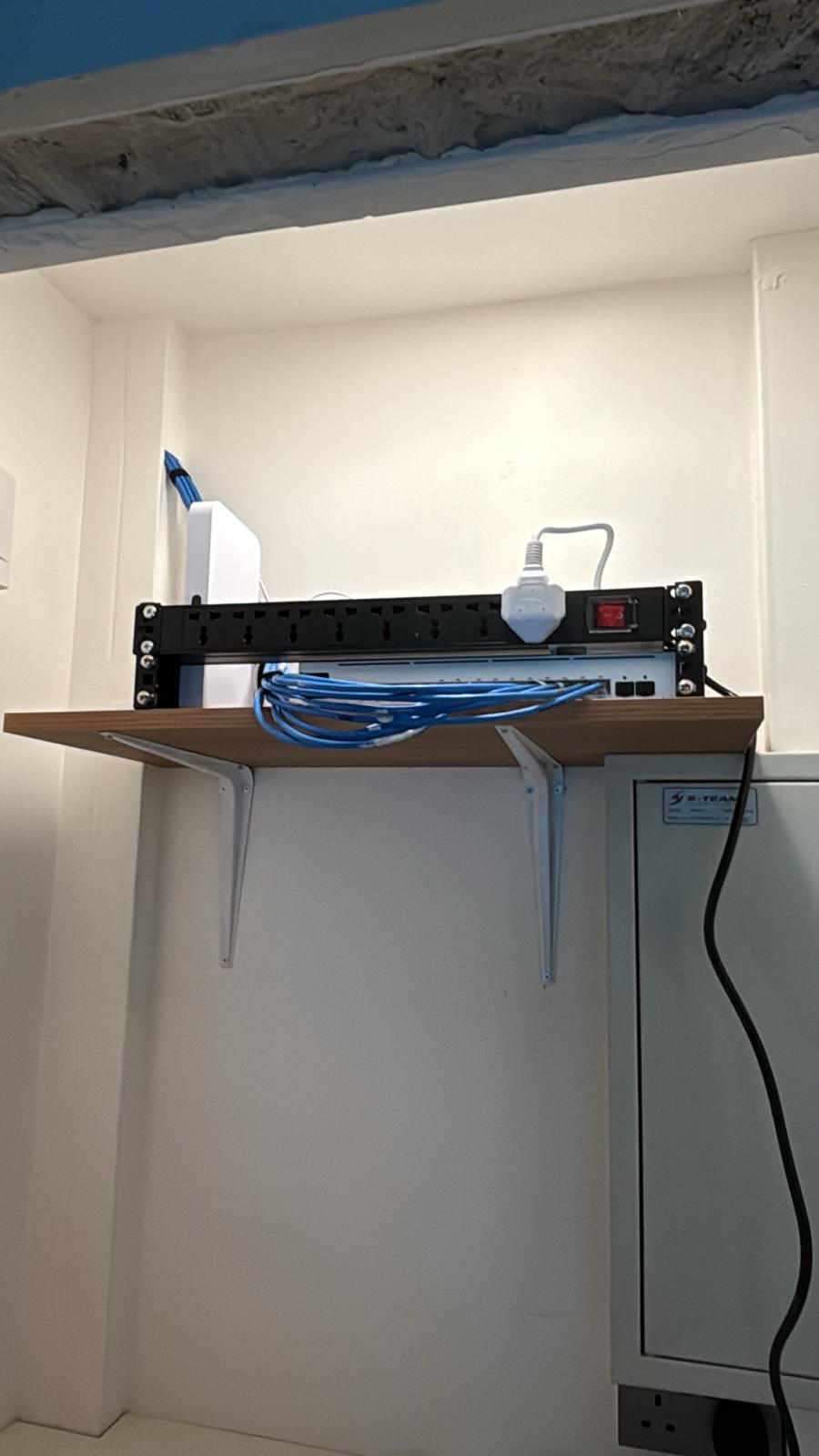
Varsity Park Installation
A real-world deployment demonstrating our network design principles. This project features strategically placed ceiling access points, complete structured cabling, and organized network rack management.
View Varsity Park ProjectRenovations & New Builds
The optimal time to design a network. We integrate with your construction timeline to route Cat6A pathways and conceal access points before plasterboard is sealed, ensuring clean aesthetics.
Plan Before RenovationExisting Homes
We audit existing infrastructure to determine if new cables can be pulled through current conduits, or if a high-performance mesh topology is the most practical solution for minimal disruption.
Upgrade Existing WiFiSpecialized Environments
Select the pathway that matches your property type or current requirements.
Landed Home WiFi
Planning coverage across multiple floors requires dedicated vertical backhaul planning.
Smart-Home Foundation
A reliable network provides the necessary backbone for AV, security, and home automation systems.
WiFi Troubleshooting
Experiencing dead zones, slow speeds, or dropped Zoom calls in an occupied home?
Prefer a specific prosumer ecosystem?
Explore Ubiquiti UniFi InstallationDeployment Process
Review & Plan
Analyzing floorplans and structural materials to map optimal access point placement.
Coordinate
Working with interior designers and electricians to route necessary Cat6A cabling.
Install & Terminate
Mounting access points and securely terminating connections at the network rack.
Configure Routing
Setting up gateways, security protocols, and managing subnet allocations.
Tune RF Environment
Adjusting transmit power and channels to ensure seamless client handoff.
Handover
Verifying coverage zones and providing a final walkthrough of the network.
Which HAP Service Do You Need?
Whole-Home WiFi
General principles, access point planning, and coverage architecture.
Complete Home Network
Premium routing, PoE switching, and access point packages.
Landed Home WiFi
Vertical roaming design for multi-storey properties and penthouses.
WiFi Troubleshooting
Diagnostics and repair for existing dead zones or dropouts.
UniFi Installation
Professional deployment of Ubiquiti UniFi ecosystem hardware.
Whole-Home Automation
Integration of lighting, AV, security, and connected systems.
Frequently Asked Questions
Whole-home WiFi utilizes multiple access points strategically placed throughout a property to ensure consistent coverage and seamless roaming, eliminating dead zones that a single traditional router cannot reach.
No. A 10Gbps plan represents aggregate WAN capacity. Individual wireless clients are limited by their internal radios, distance, and environmental conditions, typically achieving real-world speeds between 1Gbps and 2.5Gbps on modern setups.
Mesh systems use wireless backhaul to communicate between nodes, offering excellent retrofit flexibility. Wired access points are physically connected to a central switch via Ethernet, providing a dedicated backbone that generally yields higher stability and throughput for demanding environments.
The exact number depends on your floorplan, square footage, and architectural materials like concrete or structural steel. A proper assessment ensures coverage zones overlap correctly to allow devices to roam without dropping connection.
Still Not Sure What You Need?
Planning your home network?
Share your floorplan, current setup, and coverage requirements. Our engineers will recommend the appropriate network topology.
Whole Home WiFi Singapore
Architectural network design for reliable coverage, proper client roaming, and high-capacity smart-home integration. We build the infrastructure for modern living.
One Router vs. Distributed Coverage
Replacing centralized broadcast limits with targeted architectural coverage.
Single Router
Signal fades before reaching the edge.
Distributed Access Points
Overlapping zones for seamless roaming.
Wireless Mesh
Mesh nodes communicate wirelessly to extend coverage without requiring Ethernet cables.
Advantage: Highly flexible for existing homes lacking conduits.
Trade-off: Reliant on wireless backhaul, subject to RF interference.
Suitability: Medium apartments with light structural barriers.
Wired Access Points
Each access point is hardwired directly to a central network switch for a dedicated uplink.
Advantage: Bypasses wireless attenuation, maximizing stability.
Requirement: Needs structured cabling (e.g., Cat6A) to each zone.
Suitability: Multi-storey, landed, and highly integrated smart homes.
Wi-Fi 6
The robust baseline for modern homes, offering excellent device density handling through OFDMA on the 5GHz band.
Wi-Fi 7
Utilizing Singapore's approved 6GHz spectrum, Wi-Fi 7 introduces 320 MHz channels and Multi-Link Operation (MLO) to drastically reduce latency and increase stability.
Varsity Park Installation
A real-world deployment demonstrating our network design principles. This project features strategically placed ceiling access points, complete structured cabling, and organized network rack management.
View Varsity Park ProjectRenovations & New Builds
The optimal time to design a network. We integrate with your construction timeline to route Cat6A pathways and conceal access points before plasterboard is sealed, ensuring clean aesthetics.
Plan Before RenovationExisting Homes
We audit existing infrastructure to determine if new cables can be pulled through current conduits, or if a high-performance mesh topology is the most practical solution for minimal disruption.
Upgrade Existing WiFiSpecialized Environments
Select the pathway that matches your property type or current requirements.
Landed Home WiFi
Planning coverage across multiple floors requires dedicated vertical backhaul planning.
Smart-Home Foundation
A reliable network provides the necessary backbone for AV, security, and home automation systems.
WiFi Troubleshooting
Experiencing dead zones, slow speeds, or dropped Zoom calls in an occupied home?
Prefer a specific prosumer ecosystem?
Explore Ubiquiti UniFi InstallationDeployment Process
Review & Plan
Analyzing floorplans and structural materials to map optimal access point placement.
Coordinate
Working with interior designers and electricians to route necessary Cat6A cabling.
Install & Terminate
Mounting access points and securely terminating connections at the network rack.
Configure Routing
Setting up gateways, security protocols, and managing subnet allocations.
Tune RF Environment
Adjusting transmit power and channels to ensure seamless client handoff.
Handover
Verifying coverage zones and providing a final walkthrough of the network.
Which HAP Service Do You Need?
Whole-Home WiFi
General principles, access point planning, and coverage architecture.
Complete Home Network
Premium routing, PoE switching, and access point packages.
Landed Home WiFi
Vertical roaming design for multi-storey properties and penthouses.
WiFi Troubleshooting
Diagnostics and repair for existing dead zones or dropouts.
UniFi Installation
Professional deployment of Ubiquiti UniFi ecosystem hardware.
Whole-Home Automation
Integration of lighting, AV, security, and connected systems.
Frequently Asked Questions
Whole-home WiFi utilizes multiple access points strategically placed throughout a property to ensure consistent coverage and seamless roaming, eliminating dead zones that a single traditional router cannot reach.
No. A 10Gbps plan represents aggregate WAN capacity. Individual wireless clients are limited by their internal radios, distance, and environmental conditions, typically achieving real-world speeds between 1Gbps and 2.5Gbps on modern setups.
Mesh systems use wireless backhaul to communicate between nodes, offering excellent retrofit flexibility. Wired access points are physically connected to a central switch via Ethernet, providing a dedicated backbone that generally yields higher stability and throughput for demanding environments.
The exact number depends on your floorplan, square footage, and architectural materials like concrete or structural steel. A proper assessment ensures coverage zones overlap correctly to allow devices to roam without dropping connection.
Still Not Sure What You Need?
Planning your home network?
Share your floorplan, current setup, and coverage requirements. Our engineers will recommend the appropriate network topology.