Skip to Content
Home Theatre System Singapore | Design & Installation | HAP
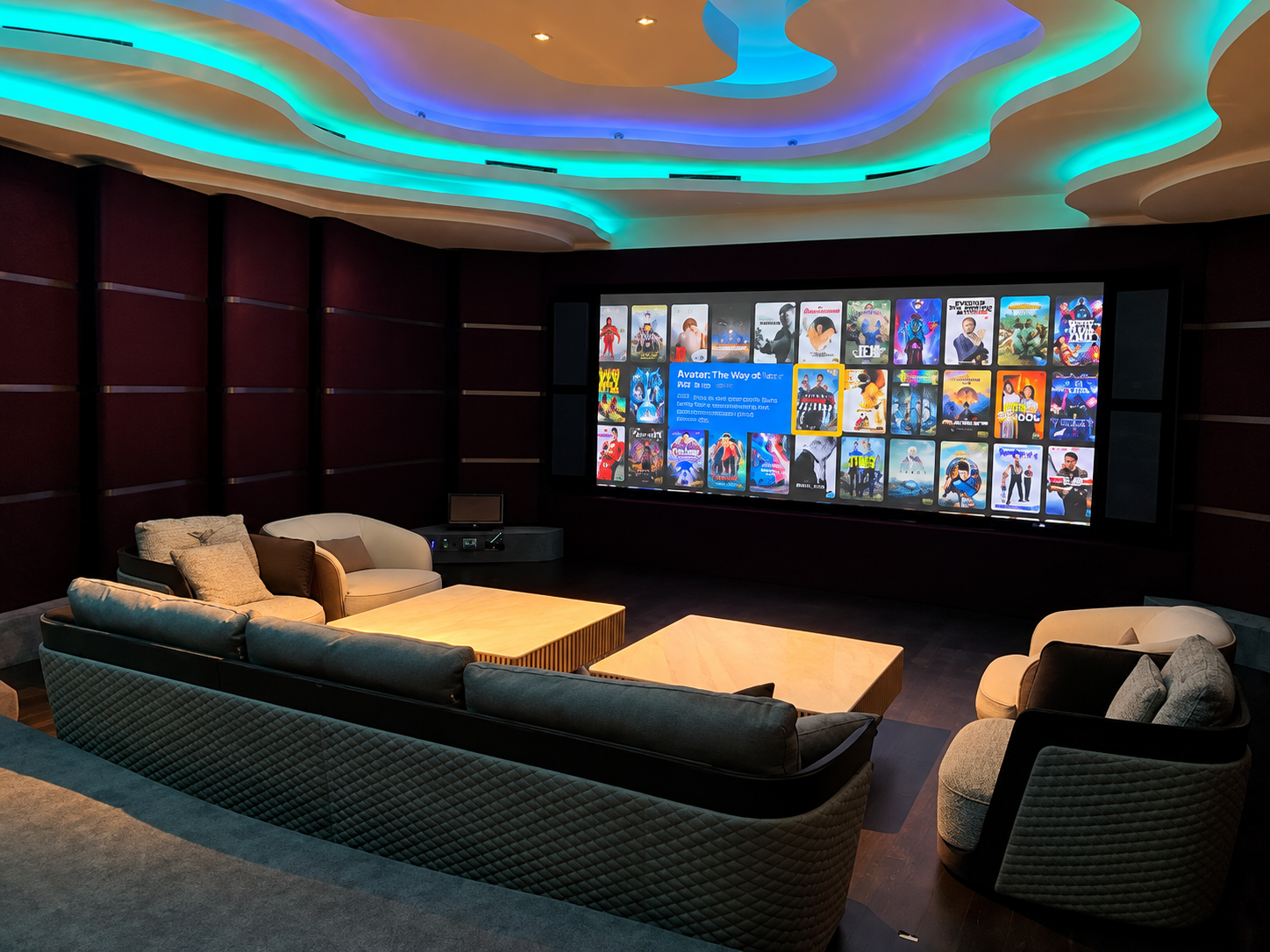
Home theatre and entertainment system installed by HAP Singapore
HAP · Audio, video & smart control

Home Theatre System Singapore

Plan the right setup for your room.

HAP designs and installs complete systems for living rooms, media rooms and dedicated cinemas, bringing audio, video, lighting and control together as one considered experience.

Room planning  ·  Installation  ·  Calibration  ·  Integration

Home entertainment · HAP
About HAP Home Theatre

HAP (Home Action Party) is a home theatre and AV integrator in Singapore, specialising in professionally designed wired surround sound, Dolby Atmos, projection and smart cinema systems. HAP designs, installs and integrates complete systems for living rooms, media rooms and dedicated home cinemas.

HAP Singapore Showroom · 55 Ubi Avenue 3, Aspial One #01-04, Singapore 408864
Start with the room

Start with the room, then plan the system.

Choosing a home theatre system in Singapore starts with the room, the seating and the way you watch. Before choosing equipment, map the screen, main seats and possible speaker positions. A clear route from each speaker to the listening area is more useful than adding channels that have nowhere suitable to go.

For a living room with limited space or placement flexibility, homeowners may compare a soundbar or wireless speaker system with a receiver-based home theatre setup. HAP focuses on professionally installed, wired home theatre systems using separate speakers, AV receivers and integrated cabling. While wireless systems can be simpler to place, a properly planned wired system offers greater flexibility for speaker positioning, surround sound, Dolby Atmos, future upgrades and integration with the rest of the home.

A media room or dedicated cinema needs a broader plan. Speaker positions, equipment storage, cable routes and lighting should be coordinated while renovation work is underway, before walls, ceilings and cabinetry are finished.

Shared walls need consideration. In a flat or condominium, consider subwoofer location and listening levels in relation to neighbours. Calibration can balance playback in the room, but it cannot prevent low-frequency sound from travelling through the building structure.
Explore living room entertainment
One complete home cinema system

More than a screen and speakers.

A receiver-based system combines a display, speakers, subwoofer, AV receiver or processor, amplification, sources and control. The receiver processes the signals and sends sound to the appropriate speaker channels.

Bowers & Wilkins 704 S3 home theatre bundle with front and centre speakers, in-ceiling speakers, subwoofer and AV receiver
Bowers & Wilkins 704 S3 system illustration from HAP. The final specification is matched to your room.
Picture
A TV or projector presents the image. A projection system may also need a screen.
Front soundstage
Left and right speakers carry music and effects. The centre speaker carries much of a film’s dialogue.
Surround & height
Surrounds place effects around the seats. Height speakers reproduce overhead effects in supported Dolby Atmos mixes.
Bass
A subwoofer handles low-frequency effects and bass. Positioning matters as much as its level.
Processing & power
The AV receiver, or processor and amplification, decodes and distributes sound to the speakers.
Sources & control
Streaming devices, game consoles and TV services provide content. The control system makes them straightforward to use.

Keep dialogue anchored to the picture.

Place the centre speaker close to the screen and aim it towards the main seats. Its positioning is especially important for intelligible dialogue.

Leave room to position the subwoofer.

Its position changes how bass sounds across the room. Leave space to adjust its location and level after installation.

Surround sound & Dolby Atmos

5.1, 7.1 or Dolby Atmos?

The right surround sound system depends on speaker placement, seating and room shape — not simply the number of channels.

Reading the numbers: a 5.1.4 example.

Compare 5.1, 7.1, 5.1.2, 5.1.4 and 7.1.4 home theatre layouts.
Layout What it includes When it can suit
5.1 Front left, centre and right, two surround channels and one subwoofer channel. A practical starting layout when the room can accommodate the main speaker positions.
7.1 A 5.1 layout with two additional surround channels behind or around the seating. A room with enough space to position the extra speakers appropriately.
5.1.2 Five main channels, one subwoofer channel and two height channels. A Dolby Atmos option when two suitable overhead speaker positions are available.
5.1.4 Five main channels, one subwoofer channel and four height channels. A room that can support four well-positioned height speakers.
7.1.4 Seven main channels, one subwoofer channel and four height channels. A larger or more flexible room with suitable positions around and above the seating.

A 7.1 system’s extra surround channels only help when the room has space for suitable placement. Dolby Atmos adds height information to supported mixes through height or in-ceiling speakers, or compatible upward-firing designs.

Decide where height speakers can go before renovation finishes. We match the receiver’s supported layouts and audio formats to the planned speaker positions, rather than choosing the largest channel count by default.

Three ways to bring cinema home

Living room, media room or dedicated cinema?

01

Living room

A shared space for conversation, family activities and daily viewing. Some homeowners may consider soundbars or wireless speakers when installation options are limited, but HAP specialises in professionally installed wired home theatre systems with separate speakers, AV receivers and planned cabling. This approach provides greater flexibility for surround sound, Dolby Atmos, future upgrades and smart-home integration.

Living room planning
02

Media room

A space planned primarily for films, sport or gaming that may still serve other purposes. It benefits from deliberate speaker positions, controlled lighting and an equipment location that remains accessible.

03

Dedicated cinema

A private home theatre allows more control over screen size, seating, lighting and acoustics. We plan these elements together so the equipment supports the room instead of competing with its design.

Custom home theatre design
Choose the picture

TV, ultra-short-throw or long-throw projector?

A TV is often straightforward for a bright living room used throughout the day. A projector can create a larger image, but its design also includes the screen, mounting, cabling and room lighting.

01 / TV

Large television

Everyday viewing where a bright display and fixed screen position are priorities.

Plan for

Mounting height, viewing distance, cable routes and connection to the AV receiver.

02 / UST

Ultra-short-throw projector

A room where the projector needs to sit close to the screen, rather than at the back of the room.

Plan for

Screen position, console placement and control of light on the viewing surface.

03 / PROJECTION

Long-throw projector

A media room or cinema where the projector can be installed at its required distance from the screen.

Plan for

Throw distance, mounting position, screen alignment, ceiling access and cabling.

Plan the projector’s position and screen dimensions before the room is finished.

Read the projector planning guide
Choose what fits

How to choose the best home theatre system for your home.

The best home theater system in Singapore is the one that fits the room and the way you use it. Before selecting equipment, consider these practical details.

  • Room dimensions and available speaker positions
  • Viewing distance, screen size and number of seats
  • Daylight and how often you watch during the day
  • Renovation stage and interior requirements
  • Streaming, game consoles and TV services
  • Future speakers, subwoofers or Atmos upgrades

For a smaller living room, simple placement and clear dialogue may matter more than extra channels. A larger room may benefit from stronger front speakers, wider seating coverage or a dedicated media-room layout.

Budget & scope

Home theatre system price in Singapore.

There is no single price that suits every room. We quote a system around the actual space, equipment requirements and installation scope.

Assess the package as a complete project, not only by the price of its speakers or receiver.

System specification

Speaker configuration and range, subwoofer count, AV receiver and amplification.

Picture

TV or projector, projection screen and the mounting requirements.

Infrastructure

Cable routes, stands or mounts, equipment storage and installation complexity.

The room

Room size, acoustic treatment and the work needed for the intended system.

Integration

Control, automation and how the AV system works with the rest of the home.

Installation & setup

Installation, programming and calibration for the completed room.

Compare the complete scope. Discuss what the design includes, how cabling and installation will be handled, and whether the room needs additional work for the intended system.
Designed for Singapore homes

Plan the technology before the finishes.

From compact flats and condominiums to landed houses, room depth, daylight, ceiling design and shared walls all influence the layout.

Coordinate with the renovation.

Agree speaker and screen positions alongside false ceilings, cabinetry, electrical points and concealed cabling. Leave adequate ventilation and service access around receivers, amplifiers and other equipment in cabinets or racks.

Consider the rooms around you.

In apartments and condominiums, consider how bass levels and subwoofer placement may affect neighbouring rooms. Thoughtful positioning and reasonable listening levels help; calibration does not prevent low-frequency sound travelling through the structure.

Use the available space thoughtfully.

In landed homes, larger spaces may allow wider speaker spacing, more seating or a dedicated cinema. We bring the technology layer together early so the final experience feels effortless.

Keep everyday use in mind.

For a shared living space, plan the audio and screen around daily use as well as film nights. The system should work with the room’s layout and interior.

Hidden AV & interior integration

A considered system.
Less visible technology.

Architectural and in-ceiling speakers can keep a room visually calm while providing planned audio coverage. Agree their positions with the interior and renovation teams before ceilings or walls are closed.

Concealed cabling, cabinetry and a hidden equipment rack can reduce visible technology without sacrificing access for servicing or ventilation. We coordinate these details with the room design so the AV system feels integrated rather than added later.

Smart home cinema control

One scene.
The room is ready.

With Control4 integration, a home theatre can work alongside lighting, curtains and other connected systems. A single scene can prepare the room without separate adjustments to every device.

  1. 01Lights dim
  2. 02Curtains close
  3. 03TV or projector starts
  4. 04AV source is selected
  5. 05Volume is prepared

Example Movie Scene for an integrated home theatre.

Explore Control4 home theatre integration
HAP design & installation

From the floor plan to the first film.

Professional home theatre installation in Singapore begins with the room, not a fixed equipment list. We work through the design and technical decisions in sequence.

  1. Understand the room

    Discuss viewing habits, seating, preferred screen and how the space will be used.

  2. Review the floor plan

    Review the renovation stage and identify when to coordinate with the project team.

  3. Plan the layout

    Map speaker and screen positions around the main seats and practical constraints.

  4. Pair the equipment

    Consider speakers, subwoofer, receiver, display and sources as one system.

  5. Coordinate the cabling

    Plan routes, electrical work, connections and equipment locations before finishes are complete.

  6. Install & programme

    Connect the system and set up the control experience.

  7. Calibrate & hand over

    Balance levels, distances and sound for the room, then show the homeowner how to use the system.

Calibration complements good design. It can improve speaker levels, timing and tonal balance at the listening position. It cannot correct speakers blocked by furniture, unsuitable seating or every acoustic problem.

We design integrated smart home, audio visual and networking systems to work together. Bringing architects, designers and builders into the conversation early helps keep the technology layer coordinated with the renovation.

From HAP's project journal

Home theatre planning, in practice.

Living room · System upgrade

Bowers & Wilkins with Epson LS800.

A published HAP project combining existing Bowers & Wilkins front speakers with a 5.1 surround upgrade, Epson LS800 projection and a 100-inch VIVIDSTORM screen.

Read the project story
Home entertainment · Holland Road

Cinema, music and karaoke in one room.

HAP’s published Holland Road project brings together Epson projection, Bowers & Wilkins 5.1 audio, a Marantz Cinema 30 and karaoke integration.

Explore the entertainment room
Home theatre brands & system design

Premium brands, integrated as one system.

HAP brings together specialist audio, projection, movie playback and smart-control brands according to the room and system design. The objective is not to force every project into one brand ecosystem, but to select suitable components and make them work together as one complete home theatre.

Bowers and Wilkins logo
Marantz logo
Epson logo
Kaleidescape logo
Visit HAP Singapore

Visit HAP’s home theatre & AV showroom in Singapore.

Visit HAP (Home Action Party), a home theatre and AV integrator in Singapore, to discuss your home theatre, surround sound, projector, speaker layout and smart-control requirements. Bring your floor plan, room photos or renovation drawings so the system can be planned around the actual space.

HAP Singapore Showroom 55 Ubi Avenue 3, Aspial One, #01-04
Singapore 408864
Appointment recommended +65 9762 6815 Contact HAP
Frequently asked questions

Before you plan your home theatre.

Answers to the practical questions about layouts, speakers, screens, installation and everyday listening.

What is the best home theatre system for a Singapore home?

There is no universal best system. Choose a speaker layout that fits the room and leaves suitable positions around the main seats.

Is 5.1 or 7.1 better?

Choose 7.1 only when the room allows its extra surround speakers to be placed appropriately. Otherwise, 5.1 is the better fit.

Is Dolby Atmos worth it?

Dolby Atmos is worth considering when you can accommodate height speakers and have content mixed for the format.

Can surround speakers be installed in the ceiling?

In-ceiling speakers can be used for surround channels when the room design calls for them. Surround channels and Dolby Atmos height channels have different roles, so the layout should identify which function each speaker serves.

Should I choose a TV or projector?

Compare the room's daylight and available screen position first. Those practical constraints can help settle the TV-versus-projector choice.

When should home theatre cabling be planned?

Mark the speaker, display and source connections on the plan before finishes begin.

Can AV equipment be hidden?

Yes. Plan a ventilated cabinet or rack with enough access to reach the equipment for servicing.

Can home theatre integrate with smart lighting and curtains?

Yes. Decide which lights and curtains should respond, then include them in the shared control scene.

Can a 5.1 system be upgraded to Dolby Atmos later?

Yes, provided the receiver supports the intended Dolby Atmos layout. Confirm that before choosing an upgrade path, and decide where the height speakers and any concealed wiring can go.

How much does a home theatre system cost in Singapore?

There is no fixed price. The system specification and installation scope determine the quotation.

Can a 5.1 home theatre system play stereo music?

Yes. A 5.1 system can play two-channel music through its front left and right speakers, or use a receiver's listening mode to distribute sound across more speakers.

Do I need acoustic panels for a home cinema?

Not every room needs dedicated acoustic panels. Their value depends on how sound reflects from the room's surfaces, the speaker placement and the listening experience you want to improve.

Can one home theatre system work well for both films and music?

Yes. A well-designed system can serve both, with receiver settings selected for the content and listening preference. Speaker choice and room setup should account for music as well as film soundtracks.

Is a projector suitable for a living room used during the day?

It can be, but daylight on the screen affects the image. Consider the room's window coverings, screen position and how often you watch in bright conditions before choosing a projector.

What is the best home theater system for the money?

The best value comes from choosing a system that fits your room and listening needs rather than paying for channels or features you cannot use. Prioritise suitable speaker placement and a well-matched receiver, and add more speakers or features only when the room can support them.

Planning a home theatre?

Start with your room.

Share your floor plan, room dimensions, renovation stage, preferred screen size and any existing AV equipment with HAP. We will use those details to plan a home theatre system in Singapore around your room, design and listening goals.

Useful details to share
  • 01Your floor plan and room dimensions
  • 02Your renovation stage
  • 03Your preferred screen size
  • 04Any existing AV equipment
HAP Singapore · Home theatre design, installation & integrationBack to top